Organize complexity
Structure large amounts of clinical information into a coherent relational map.

Professional training for therapists
A structured visual framework that helps therapists organize complex relational information, recognize the patterns keeping couples stuck, and build clearer case conceptualizations.
Understand the system.
Transform the relationship.
The challenge
Couples therapy often involves navigating a large amount of emotional, relational and historical information.
The challenge is not always knowing what to do. Often, it is understanding how all the pieces fit together.
The Relationship Mapping Method™ helps therapists organize complexity, identify recurring interaction patterns and develop greater clinical clarity.
You may know the couple's history, attachment patterns, triggers and wounds, yet still struggle to hold the whole relational system in your mind at once.
The Relationship Mapping Method™ is a structured visual framework designed to help therapists organize relational information, recognize interaction patterns and build clearer case conceptualizations.
Rather than introducing another therapeutic model, it complements the approach you already use by providing a clearer way to understand the relational system.
Not another model of couples therapy.
A framework for organizing relational complexity.
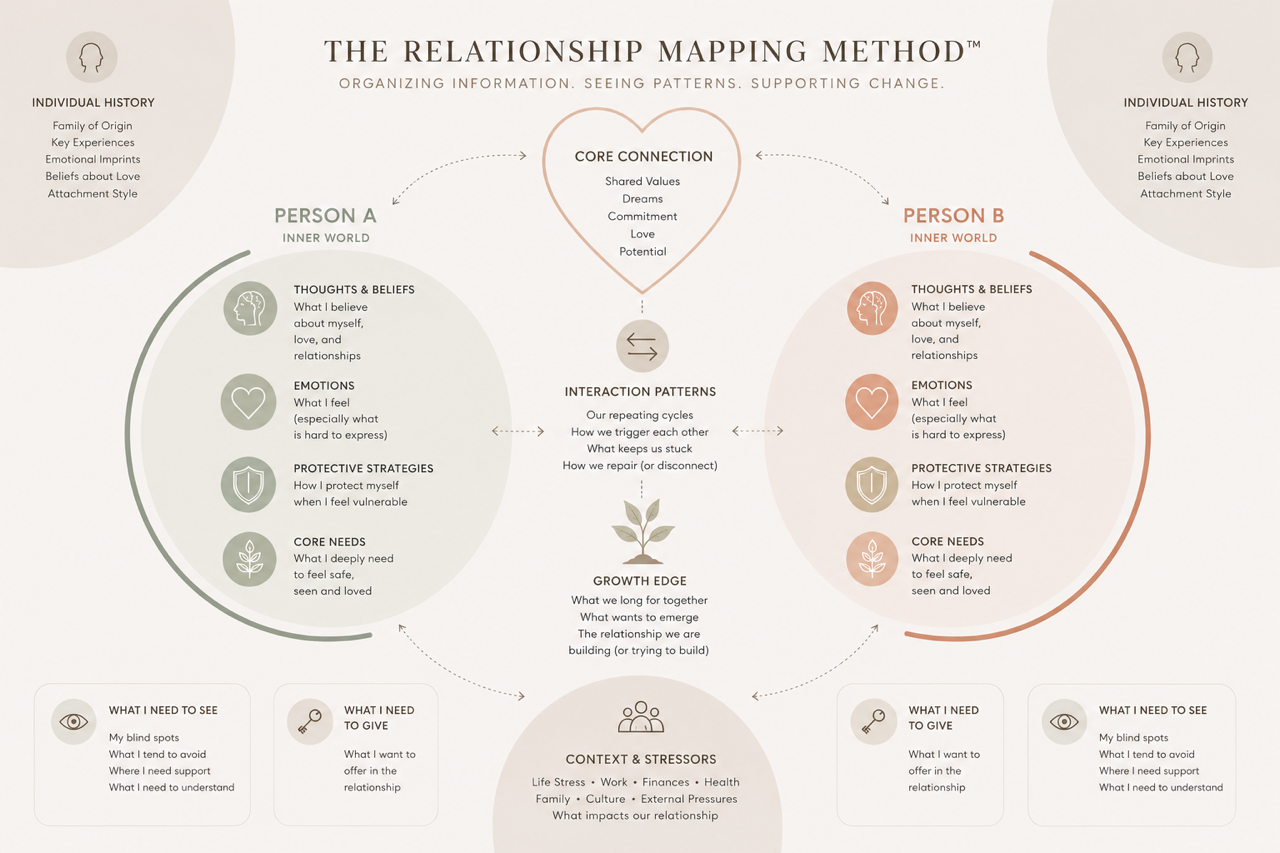
Every map organizes the story of the relationship into one visual system.
Instead of holding dozens of disconnected pieces of information, you can see how they interact.
Structure large amounts of clinical information into a coherent relational map.
Identify recurring cycles, protective strategies and relational dynamics with greater clarity.
Designed to work alongside EFT, Gottman, IFS, psychodynamic, systemic and integrative models.
Help couples see their relational dynamic without reducing either partner to “the problem”.
A simple three-phase process that turns complexity into clarity.
Gather the relational story:
Organize the information:
Use the map in therapy:
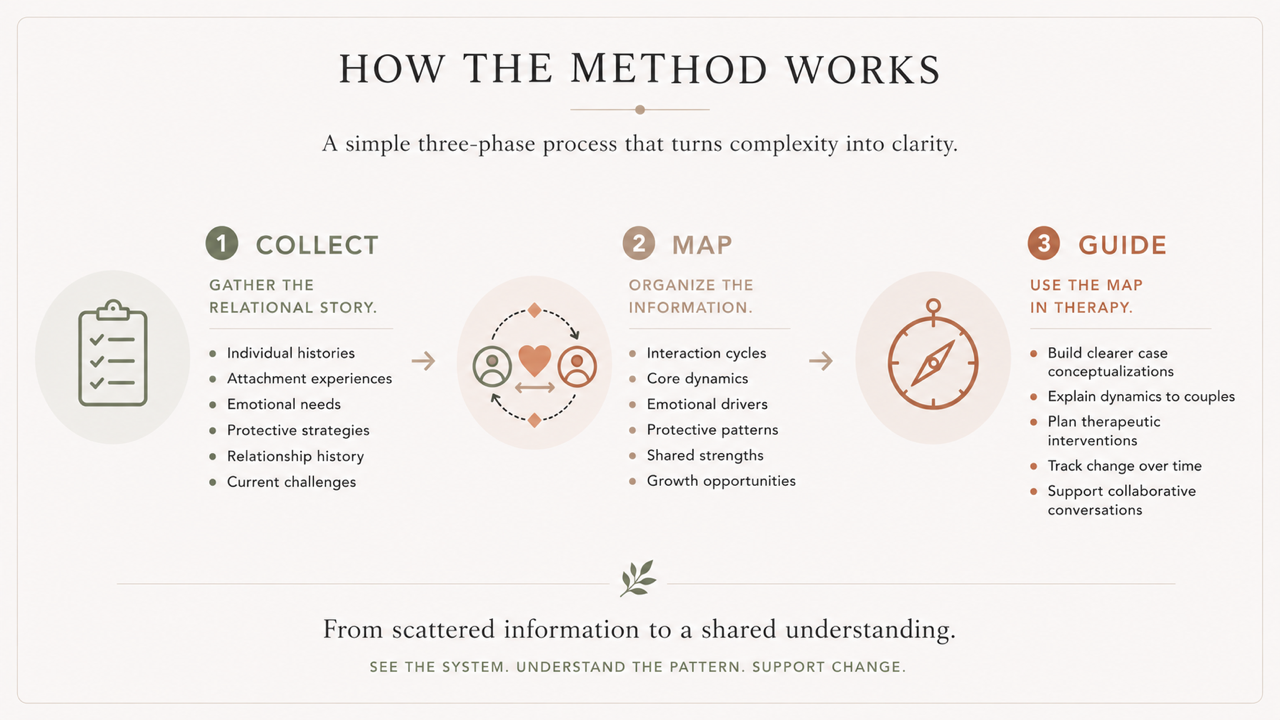
From scattered information to a shared understanding.
See the system. Understand the pattern. Support change.
Designed for professionals working with relationships, including:
This is a professional training, not a self-help tool for couples.
The first RMM cohort will be a small live online training experience for therapists and relationship professionals who want to learn the method and help shape its development.
Exact dates and details coming soon.
Join the interest list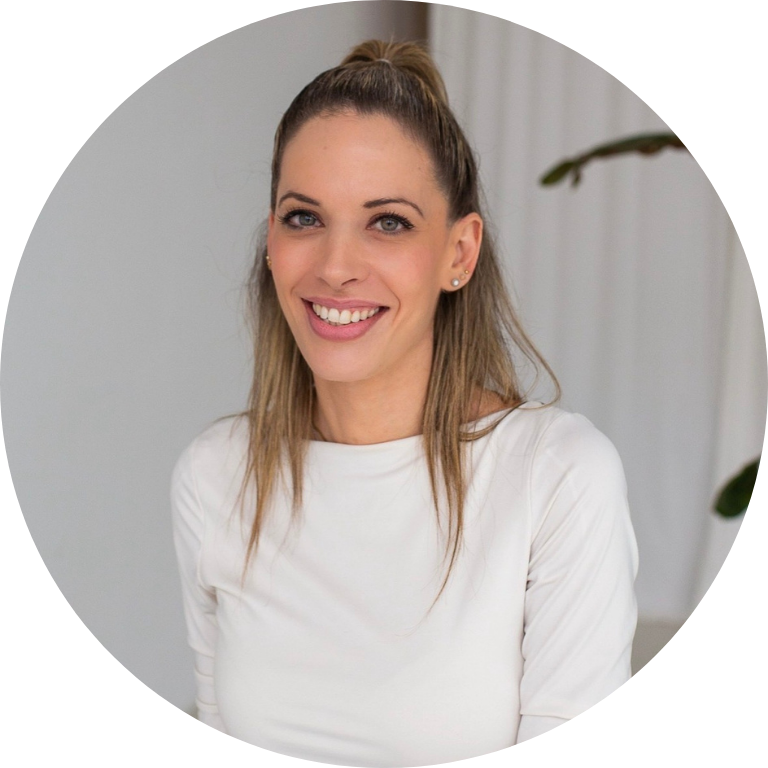
About the creator
Individual and couples therapist
Claudia Redlinger is an individual and couples therapist with over 15 years of experience supporting individuals and couples.
Her integrative work draws from attachment, trauma-informed therapy, EMDR, IFS, mindfulness and relational approaches.
The Relationship Mapping Method™ grew out of a practical clinical need: finding a clearer way to organize the complexity of couples work without replacing the therapeutic model a clinician already uses.
By the end of the training, you will be able to:
Organize complex relational information
Build structured relationship maps
Recognize recurring interaction patterns
Develop clearer case conceptualizations
Integrate the framework into your existing clinical practice
Join the early interest list for the first The Relationship Mapping Method™ training.
You'll be the first to receive the confirmed dates, format, introductory pricing and enrolment details.